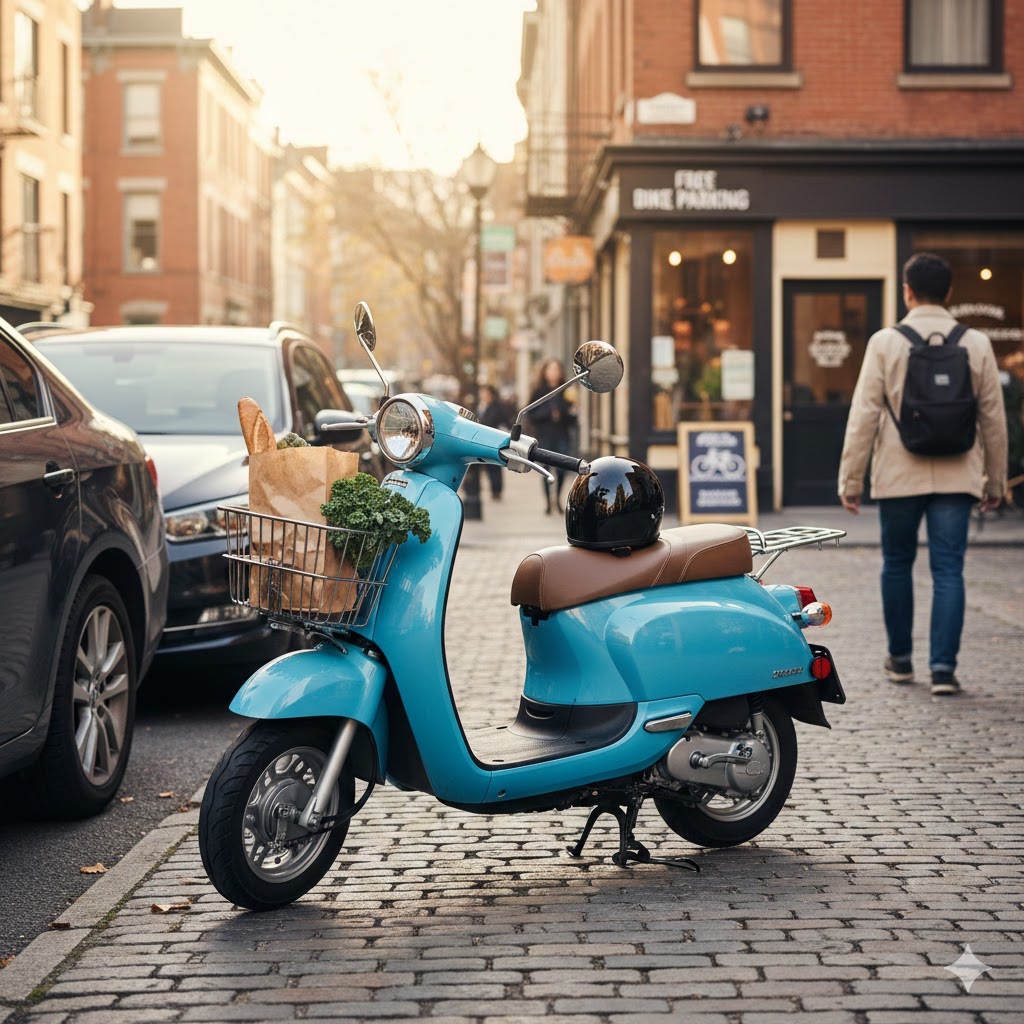
If you are an urban commuter currently looking to purchase a vehicle or trade in your car within the next 30 days, I have a counterintuitive piece of advice: Don’t just buy a car. As a former vehicle buyer and trade-in specialist, I’ve appraised thousands of cars that were “city-driven” to death. Urban environments are the natural enemy of the internal combustion engine. If your daily life consists of short trips to the grocery store, gym, or office, you are the prime candidate for the most overlooked tool in the urban commuter toolkit: the 50cc scooter.
1. Stop Killing Your Car with “Short-Trip Sludge”
The biggest insider secret in the car industry is that “low mileage” doesn’t always mean “good condition.” Short trips (under 5 miles) are catastrophic for car engines. According to research from Valvoline Global, an engine needs at least 15 minutes of driving to reach an optimal operating temperature.
When you drive 2 miles to the store and turn the car off, moisture and unburnt fuel collect in the oil. This leads to:
- Engine Sludge: Oil turns into a thick gel that blocks lubrication.
- Corrosion: Acids formed during cold starts eat away at your exhaust and engine internals.
- Battery Drain: A car’s alternator often cannot recharge the energy used to start the engine in a short trip, leading to premature battery failure.
By using a 50cc scooter for these errands, you preserve your car for the long trips it was designed for.
2. Radical Fuel Efficiency: 100+ MPG
For the urban commuter, fuel is a primary overhead cost. While the average car in the U.S. gets roughly 24.4 MPG (per U.S. Department of Energy data), a 50cc scooter is a different beast entirely.
Standard 50cc models, like the Honda Metropolitan, frequently achieve 80 to 110 MPG. In a typical city scenario, you can cover your entire week’s errands on a single 1.5-gallon tank of gas—roughly the cost of a fancy latte.
3. The “License Loophole”
One of the most appealing aspects of the 50cc class is the low regulatory barrier. In many states, a vehicle with an engine displacement of 49cc or 50cc is classified as a “moped” rather than a motorcycle.
According to 2026 licensing guides from CarInterior, many jurisdictions allow you to operate these urban commuters with a standard driver’s license.
- No Motorcycle Endorsement: In states like South Carolina or North Carolina, you often don’t need a special license or even insurance for a 49cc bike (though I strongly recommend both for safety and liability).
- Minimal Registration: Often, a one-time registration fee replaces the high annual taxes associated with cars.
4. Total Cost of Ownership (TCO)
As an urban commuter, your goal is to minimize the cost per mile. Data from Money.com highlights that switching to a scooter can save an individual upwards of $4,000 per year in fuel, insurance, and parking fees.
| Expense | Compact Car (Annual) | 50cc Scooter (Annual) |
| Fuel (City) | ~$600+ | ~$60 – $80 |
| Insurance | $1,200 – $2,000 | $75 – $150 |
| Parking | $200 – $500 | Usually Free |
| Oil Change | $70 (Professional) | $15 (DIY – 10 Mins) |
The 30-Day Strategy: What Should You Buy?
If you’re ready to add a “second vehicle” to your stable this month, stay away from the cheap, unbranded “box bikes” sold online. They have zero resale value and no parts support. Stick to the “Big Three” to ensure your investment stays liquid:
- Honda Metropolitan/Ruckus: Indestructible and holds value better than a Toyota Camry.
- Yamaha Zuma 50: The “SUV” of scooters with beefier tires for rough city streets.
- Genuine Buddy 50: The enthusiast’s choice for speed (within the 50cc limit) and reliability.
The Bottom Line: A 50cc scooter isn’t just a fun summer toy; it’s a strategic financial tool. It protects your car’s resale value, slashes your monthly “cost to live,” and turns the nightmare of urban parking into a non-issue.
And when you are ready to buy: Stop Overpaying: Why the 2026 Car Market Actually Favors the Used Buyer